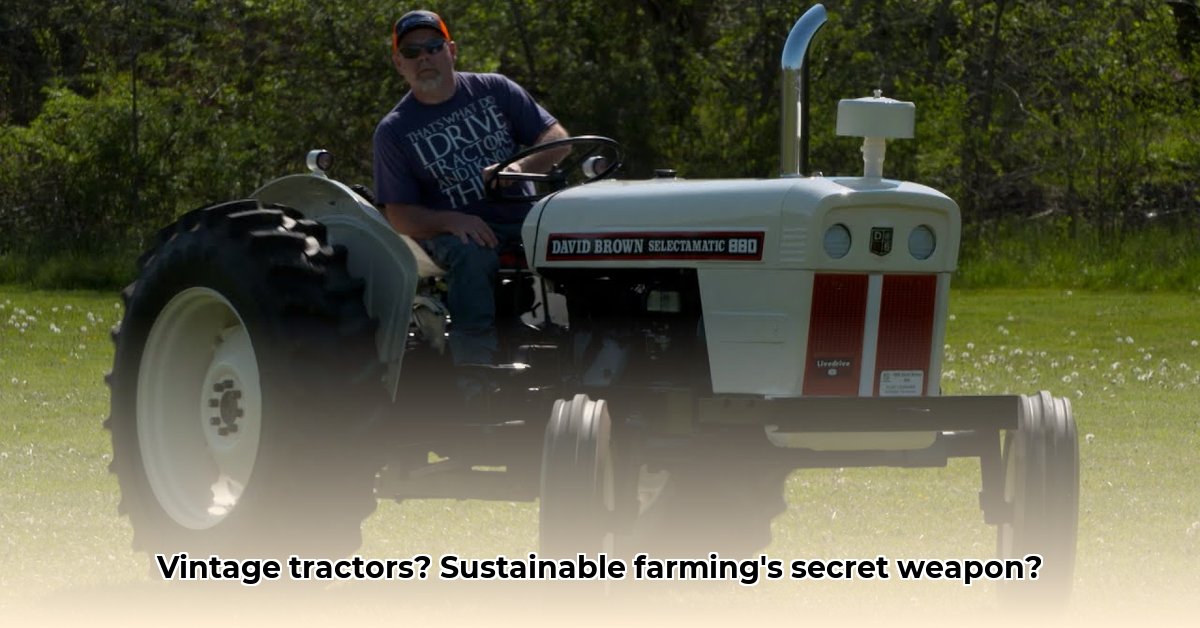
The David Brown Legacy: More Than Just a Sturdy Tractor
David Brown tractors. The name evokes images of robust, hardworking machines built to withstand decades of demanding farm life. These weren't disposable tools; they were investments designed for longevity, reflecting an era where repair was prioritized over replacement. These durable workhorses offer a fascinating glimpse into agricultural history and, surprisingly, a relevant model for modern sustainable farming. Let's explore the story of David Brown tractors and their surprisingly impactful contribution to environmentally conscious agriculture.
For another example of vintage tractor restoration, check out this 1957 John Deere 327.
David Brown's approach wasn't just about producing tractors; it was about crafting dependable, straightforward machines. Their designs prioritized simplicity, using readily available components to facilitate easy repairs. A broken part didn’t necessitate a specialized mechanic or a lengthy wait for replacements; many repairs could be handled on-farm, embodying a philosophy of durable, long-lasting equipment. This wasn't mere engineering; it was a commitment to building machines that remained useful for years, a stark contrast to today's often-planned obsolescence.
This commitment to durability and repairability is what distinguishes David Brown tractors. Many continue to operate on farms today, a testament to their robust construction and ingenious design. This contrasts sharply with modern, complex machinery where minor malfunctions can lead to costly repairs or replacements. Isn't it remarkable that a tractor from decades ago can still be functional and practical today? This longevity is a key element of sustainability.
The Enduring Appeal of a David Brown Tractor: Why They Still Matter
The remarkable longevity of David Brown tractors isn't coincidental; it's a direct outcome of their design philosophy. Their simplicity—fewer complex parts, fewer points of potential failure—makes them incredibly resilient. When repairs are needed, they are generally easier and less expensive than their modern counterparts. This translates into considerable cost savings over the tractor's lifespan.
The impact extends beyond the farm. The ongoing use and restoration of these tractors fosters a strong sense of community. Enthusiasts globally actively maintain and restore these machines, sharing knowledge, parts, and a passion for preserving a piece of agricultural history. These restoration projects aren't just about restoring old machinery; they're about preserving valuable skills and promoting a sustainable approach to resource management—a cycle of reuse, repurposing, and revitalization.
Furthermore, these vintage tractors represent a shift in mindset. They remind us that quality, longevity, and repairability are valuable attributes. Should modern manufacturers re-evaluate their design philosophies and prioritize longer lifespans? The answer is a resounding yes, and David Brown tractors exemplify a compelling blueprint for a more sustainable future.
Sustainable Farming: A Vintage Perspective
David Brown tractors are more than historical artifacts; they embody key principles of sustainable agriculture:
Minimizing Waste: Their exceptional repairability drastically reduces the environmental impact of disposal, unlike many modern machines discarded prematurely.
Extending Lifespan: With proper care and readily available parts, a David Brown tractor can serve a farm for decades, reducing the need for frequent replacements and their associated manufacturing impacts.
Efficient Resource Use: Their relatively simple design used less material during manufacturing and requires fewer resources for maintenance.
Community Building: The restoration community shares knowledge and skills, fostering sustainability on a social level.
A Roadmap for a More Sustainable Agricultural Future: Actionable Steps
The lessons from David Brown tractors provide valuable insights for a more sustainable agricultural future. We can translate these into actionable steps for various stakeholders:
Enthusiasts & Collectors: (0-1 years) Create online communities and databases for parts and restoration techniques. (3-5 years) Establish comprehensive parts supply chains.
Agricultural Museums & Institutions: (0-1 years) Showcase David Brown tractors in educational exhibits, highlighting their design philosophy. (3-5 years) Develop workshops focusing on sustainable repair and maintenance.
Tractor Manufacturers: (0-1 years) Research the simplicity and repairability of David Brown tractors. (3-5 years) Design tractors with easily replaceable modular components.
Sustainable Agriculture Advocates: (0-1 years) Promote the use of restored vintage tractors. (3-5 years) Advocate for policies incentivizing the use and restoration of durable, repairable equipment.
How to Restore a David Brown Tractor for Sustainable Farming
Restoring a David Brown tractor, while challenging, is achievable. Careful planning and budgeting are crucial. Sourcing parts strategically is key to managing costs. The project's feasibility depends on your mechanical skills and resources. A restored David Brown tractor offers a sustainable and cost-effective farming solution. Isn't the potential reward—a functional, sustainable piece of farming equipment—worth the considerable effort?
Assessing Your David Brown Tractor: The Starting Point
Meticulously document the tractor's condition. Photograph everything and create a detailed inventory of missing or damaged parts. This assessment is crucial for realistic budgeting and planning. Assess the engine, hydraulics, and other key systems. This is a critical first step.
Engine Overhaul: The Heart of the Matter
The engine is often the most expensive part of restoration. A complete overhaul kit might cost under $600, but machine shop work could easily exceed $1000. Carefully determine what work you can perform yourself versus needing professional assistance.
Parts Sourcing: A Strategic Approach
Locating parts can be challenging. Consider aftermarket components where appropriate. Online forums and communities dedicated to David Brown tractors are invaluable resources.
Prioritizing Repairs: A Phased Approach
Prioritize essential systems (engine, hydraulics, transmission) before addressing cosmetic repairs. This phased approach makes the project more manageable and cost-effective.
The Financial Factor: Budget and Cost Control
Develop a detailed budget including parts, labor, tools, and consumables. Regularly track spending and include a contingency buffer for unexpected problems.
Sustainable Farming Considerations
Restoring a David Brown tractor aligns with sustainable farming practices. It's a commitment to durable technology and repair over replacement, reducing your carbon footprint and promoting resource efficiency.
Putting it all Together: A Guide to Success
Remember, patience and persistence are key. Document your progress, celebrate milestones, and connect with other enthusiasts for support. A restored David Brown tractor is a sustainable solution for years to come.